What Makes a Quality Access Mat?
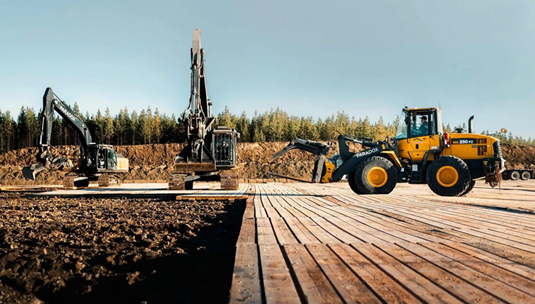
Access mats are a critical component of temporary access infrastructure, helping project teams maintain mobility, improve site safety, and reduce environmental disturbance across challenging terrain. Whether supporting construction, utility work, energy development, mining operations, forestry activities, or infrastructure projects, the performance of an access mat system can directly impact project efficiency and long-term costs.
While access mats may appear similar at first glance, significant differences can exist in material selection, manufacturing methods, structural design, and fastening systems. These factors influence everything from load-bearing performance and durability to maintenance requirements and service life.
This guide outlines six important characteristics to consider when evaluating access mats and understanding how construction quality contributes to field performance.

1. Material Selection and Wood Characteristics
The foundation of any timber access mat is the wood itself. Species selection, moisture content, growth conditions, and fibre strength all play a role in determining how a mat will perform over its lifespan.
When evaluating access mats, it’s important to understand:
- The wood species being used
- Where the timber was sourced
- Moisture content at the time of manufacturing
- Consistency of material quality throughout the mat
Timber grown in different regions can exhibit varying density, strength, and durability characteristics, even within the same species. Environmental factors such as climate, soil conditions, and growth rates can all influence wood performance.
Material quality is particularly important for mats that will be subjected to repeated loading, seasonal freeze-thaw cycles, and prolonged exposure to the elements. Understanding the characteristics of the lumber used can provide valuable insight into expected durability and structural performance.
2. Surface Quality and Worker Safety
A quality access mat should provide a stable, predictable working surface for personnel and equipment.
The top layer of a mat should be inspected for defects that may create safety concerns or accelerate deterioration, including:
- Excessive wane
- Loose bark
- Large surface splits
- Protruding material
- Significant board damage
While certain natural wood characteristics may be acceptable within internal layers of a mat, surface defects can become trip hazards, collect debris, or create maintenance concerns over time, especially in high-traffic environments.

3. Structural Design and Board Configuration
The overall design of an access mat has a significant impact on its ability to distribute loads and withstand repeated use.
Several elements should be evaluated when assessing mat construction:
- Board Spacing
Boards should be installed with consistent spacing throughout the mat. Uneven gaps can create tripping hazards and contribute to uneven loading patterns. - Edge Alignment
Properly constructed mats should have consistent board alignment along all edges. When placed together, mats should create a relatively smooth and continuous surface that facilitates equipment movement and minimizes edge damage. - Finger Design and Placement
Interlocking “finger” systems should be manufactured with consistent dimensions and positioning to ensure compatibility between mats and maintain surface continuity throughout an access road or work area. - Internal Structure
The internal or “backbone” layer of a mat plays a vital role in load transfer and structural integrity. Strong, continuous board placement helps distribute loads more effectively while reducing localized stress concentrations that can lead to premature wear.
Thoughtful board configuration can significantly influence a mat’s ability to withstand heavy equipment traffic over multiple deployment cycles.
4. Fastening Systems and Mat Integrity
An access mat’s fastening system is one of its most important structural components. Fasteners allow individual boards to function as a single unit and help maintain dimensional stability throughout the service life of the mat.
When evaluating fastening systems, consider:
- Fastener quantity
- Fastener spacing
- Fastener placement
- Hardware quality
- Resistance to loosening under repeated loading
A well-designed fastening pattern helps prevent movement between boards and reduces the likelihood of deformation during handling and operation.
One common form of deterioration in timber access mats is “diamonding,” where a mat gradually loses its rectangular shape due to excessive movement between boards. Robust fastening systems help maintain structural integrity and prolong usable service life.
The goal is not necessarily to maximize the number of fasteners, but to ensure the fastening design effectively supports the intended loading conditions and operating environment.

5. Fastener Installation and Maintenance Considerations
Even the best fastening system can underperform if fasteners are installed incorrectly.
Several factors influence long-term performance:
- Countersinking
Fasteners should be recessed sufficiently to avoid creating hazards or interfering with stacking and transportation. Excessive countersinking, however, can remove unnecessary material from critical structural members and may increase the risk of localized damage. - Alignment
Bolt holes should be drilled accurately and consistently. Proper alignment helps distribute loads evenly across the mat and minimizes stress concentrations. - Tightening
Loose hardware can contribute to board movement, reduced stiffness, and accelerated wear. Regular inspection and proper installation practices help maintain structural performance throughout the life of the mat. - Hardware Selection
Fasteners should be appropriately sized for the mat design and intended application. Hardware that is too short may not provide sufficient holding power, while excessive bolt length can create maintenance and handling challenges.
Fastener installation quality often becomes most apparent after several years of service, making it an important consideration for organizations focused on lifecycle performance rather than simply initial purchase cost.
6. Construction Method and Manufacturing Approach
Modern access mats may be manufactured using a variety of construction methods and fastening technologies.
Common approaches include:
- Traditional bolted timber mats
- Engineered timber systems
- Laminated wood designs
- Specialty composite alternatives
Each construction method offers different characteristics in terms of flexibility, rigidity, repairability, weight, and long-term maintenance requirements.
For example, some engineered systems prioritize stiffness and dimensional consistency, while traditional bolted timber mats may provide greater flexibility on uneven terrain. The most appropriate solution depends on project requirements, loading conditions, environmental considerations, and anticipated deployment frequency.

Looking Beyond Initial Cost
Access mats represent a significant investment, and evaluating quality should involve more than simply comparing purchase or rental rates.
Organizations should also consider:
- Expected service life
- Repairability
- Refurbishment opportunities
- Maintenance requirements
- Transportation efficiency
- Operational reliability
- Total cost of ownership
In many cases, a mat that provides longer service life and lower maintenance requirements can deliver substantially greater value over time than a lower-cost alternative.
For fleets that see frequent deployment, access to inspection, repair, cleaning, and refurbishment services can further extend asset life and support long-term sustainability goals.
Questions to Ask Before Selecting Access Mats
Before procuring access mats for a project, consider asking suppliers the following questions:
- What wood species and materials are used?
- How are the mats constructed and fastened?
- What quality-control processes are followed during manufacturing?
- What is the expected service life under typical operating conditions?
- What maintenance recommendations are provided?
- Are cleaning, inspection, and recertification services available?
- Have the mats been successfully used in similar applications or operating environments?
These questions can help project teams compare solutions more effectively and make informed decisions based on long-term value rather than upfront cost alone.
Need Help Selecting the Right Access Mat Solution?
Every site presents unique challenges. From temporary access roads and crane work pads to environmentally sensitive projects, selecting the right matting system can significantly impact safety, performance, and project costs.
Speak with a Paradox access specialist to discuss your project requirements and explore the most effective access solution for your site.