Not All Matting Systems Are Designed for the Same Job
While both products are designed to improve access and stability in challenging ground conditions, they are engineered for different applications.
Access Mats
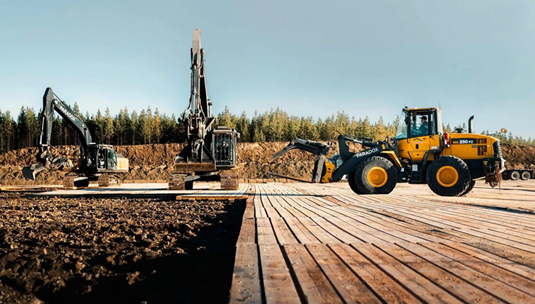
Access mats are designed primarily for temporary site access, work pads, and equipment travel routes.

Best suited for:
- Temporary roads
- Construction site access
- Utility projects
- Pipeline construction
- Emergency response access
- Aviation and remote airstrip support
- General construction and public works projects
Typical benefits:
- Creates safe access for personnel and equipment
- Improves mobility in remote or difficult-to-reach locations
- Reduces rutting and ground disturbance
- Lower transportation costs compared to heavier matting systems
- Quick installation and removal
Common materials:
- Oak
- Fir
- Hybrid wood construction
Different material types offer different performance advantages. Hardwood mats generally provide greater durability, while lighter-weight softwood options may reduce transportation and logistics costs.
Rig Mats
Rig mats are engineered for projects involving higher loads and more demanding ground conditions.

Best suited for:
- Drilling and service rigs
- Heavy equipment operations
- Temporary crossings
- Pipeline crossings
- Mining projects
- Trenching and shoring applications
- Heavy industrial construction
Typical benefits:
- Supports heavier loads
- Provides greater structural capacity
- Improves accessibility across unstable terrain
- Reduces operational downtime
- Enhances safety in challenging site conditions
Rig mats are often selected when equipment weights exceed the capabilities of traditional access matting or when additional bridging strength is required.
Key Considerations When Selecting a Matting Solution
When evaluating temporary access options, project teams should consider:
Ground Conditions
Soft soils, muskeg, wetlands, thawing ground, and saturated conditions may require higher-capacity matting systems.
Equipment Loads
A pickup truck, excavator, articulating haul truck, and drilling rig all place dramatically different demands on an access surface.
Project Duration
Longer-term projects may benefit from more durable solutions, while short-term projects may prioritize transportation efficiency and ease of installation.
Environmental Requirements
In environmentally sensitive areas, the ability to minimize soil disturbance and simplify reclamation can be equally as important as load-bearing capacity.

Temporary Access Is About More Than Mobility
Today’s matting systems do much more than simply provide access.
A well-designed temporary access solution can help:
- Improve site safety
- Reduce environmental disturbance
- Limit ground damage
- Improve equipment productivity
- Reduce aggregate hauling requirements
- Simplify site reclamation
- Keep projects moving through challenging weather conditions
When properly selected and installed, matting can become a critical component of project efficiency rather than simply a logistical requirement.
There’s No Such Thing as a “One-Size-Fits-All” Mat
One of the biggest misconceptions in the industry is that all mats are essentially the same. In reality, temporary access solutions are engineered around specific loading requirements, site conditions, and project objectives.
A matting system that performs exceptionally well on a utility right-of-way may not be suitable for supporting a drilling rig or bridging a pipeline crossing. Selecting the right solution starts with understanding the application first, and the product second.
Depending on project requirements, solutions may include:
- Heavy-duty crane mats
- Composite mat systems
- Pipeline crossing systems
- High-traction matting for steep grades
- Engineered access roads
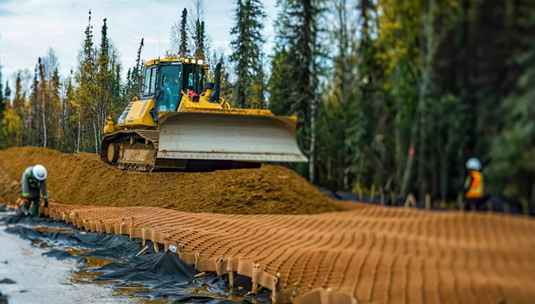
- Ground stabilization solutions for poor soil conditions
The best solution is rarely determined by a product name alone. Instead, it comes down to understanding site conditions, loading requirements, environmental considerations, and project objectives.
Choosing the Right Partner
Whether you call them rig mats, access mats, swamp mats, timber mats, or construction mats, the goal remains the same: creating safe, reliable access where conditions make it difficult. Selecting the right temporary access solution starts with evaluating your site conditions and understanding how the infrastructure will be used. Paradox works with project teams across construction, energy, mining, utility, and infrastructure sectors to develop practical temporary access solutions that keep projects moving safely and efficiently.