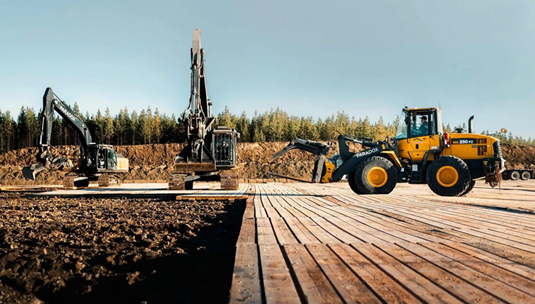
Construction, energy, mining, and infrastructure projects often encounter soft ground, muskeg, wetlands, and environmentally sensitive terrain. Establishing safe and reliable access is critical to maintaining productivity while minimizing environmental disturbance.
Understanding Traditional Access Matting
- Timber access mats
- Composite mats
- Steel mats
- Benefits
- Rapid deployment
- Temporary access
- Equipment mobility
- Environmental protection
Common Challenges with Access Mats
Cost Volatility
- Timber pricing can fluctuate.
- Transportation costs continue to impact projects.
- Availability may vary by region.
Long-Term Projects
- Rental periods can become expensive.
- Multiple mobilizations increase costs.
Ground Conditions
- Extremely weak soils may require multiple mat layers.
- Rutting and maintenance can occur under sustained loading.

When Ground Stabilization Becomes a Better Option
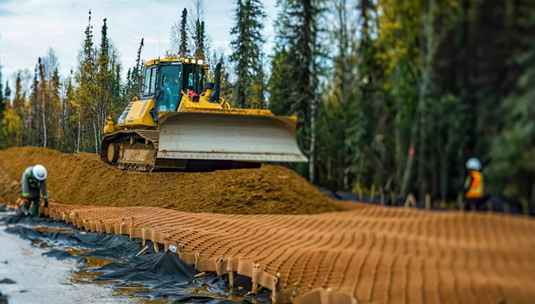
For projects requiring semi-permanent or permanent access, conventional access matting may not always be the most economical solution. In these situations, geocellular confinement systems such as Tough Cell® can improve load distribution and reduce reliance on imported aggregate.

Benefits of NPA Tough Cell®
- Cost Efficiency
By confining locally available fill materials, Tough Cell systems can reduce aggregate requirements and limit hauling distances, helping lower overall project costs.
- Reduced Environmental Impact
Reduced imported aggregate
Less disturbance
Lower hauling requirements
Improved reclamation potential
- Long-Term Structural Support
Load distribution
Reduced maintenance
Permanent access roads
Working platforms
Industrial pad construction
Access Mats vs. Ground Stabilization Systems
Access Mats
- Temporary access
- Rapid deployment
- Minimal site preparation
- Ideal for short-duration projects
Ground Stabilization (Tough Cell)
- Semi-permanent or permanent infrastructure
- Reduced maintenance
- Improved load distribution
- Lower lifecycle costs on longer projects

Summary
Every project site presents unique challenges. While access matting remains one of the most effective solutions for temporary access, some projects may benefit from ground stabilization technologies that provide longer-term performance and lower lifecycle costs. Understanding the strengths of each approach helps project teams select the most effective solution for their site conditions, schedule, and budget.