Stronger Ground Does Not Necessarily Require More Aggregate
Resource, construction, and infrastructure projects often require access to locations with weak or unstable ground conditions. Wetlands, muskeg, high-water-table areas, and soft soils can make it difficult to support the heavy equipment needed to build and maintain critical infrastructure. The challenge is simple: how do you create a stable working surface where the ground itself lacks strength? Traditionally, the answer has been to import large volumes of aggregate, but advances in ground stabilization technology are giving project teams new options to improve performance while reducing material requirements.
The Challenge of Weak Ground Conditions
- Wetlands
- Muskeg
- Soft soils
- Seasonal moisture
- Heavy equipment loading
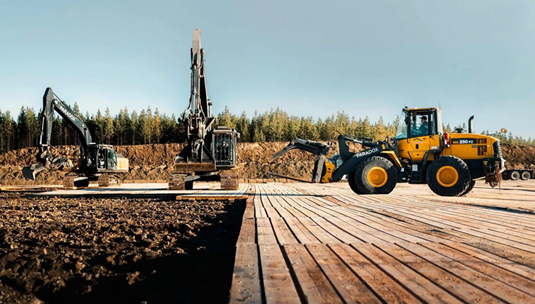
Temporary Access Solutions (Matting)
Benefits
- Quick deployment
- Temporary access
- Environmental protection
- Equipment mobility
Limitations
- Rental costs
- Long-term use
- Maintenance
- Multiple relocations
When Permanent Access is Required
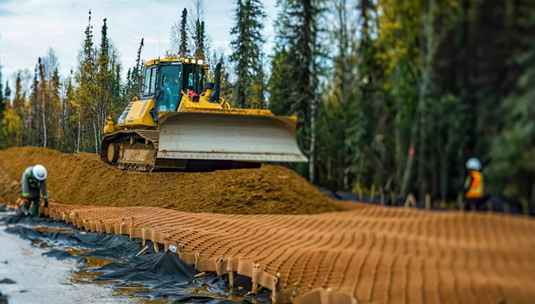
Reducing Aggregate Consumption through Ground Stabilization
- Load distribution
- Cellular confinement
- Local fill utilization
- Aggregate reduction
- Reduced hauling
Environmental and Operational Benefits
Reduced Aggregate Requirements
Less quarry material.
Less Truck Traffic
Fewer haul loads.
Lower Emissions
Reduced transportation footprint.
Less Site Disturbance
Smaller environmental footprint.
Improved Lifecycle Performance
Reduced maintenance and rehabilitation.
Every project presents unique site challenges. While access mats remain one of the most effective solutions for temporary access, advances in ground stabilization technology have expanded the options available for projects requiring longer-term performance. By matching the right solution to site conditions, project teams can improve constructability, reduce environmental impacts, and optimize overall project costs.
Not sure whether your project would benefit from access matting, ground stabilization, or a combination of both? Our team can help evaluate site conditions and identify the most effective solution.