Spring Breakup in Alberta: How to Maintain Site Access During Freeze-Thaw Conditions
Every spring, Alberta’s construction, energy, mining, utility, and forestry sectors face the same challenge: maintaining safe, reliable access as frozen ground begins to thaw.
Spring breakup occurs when rising temperatures cause frost to leave the ground, reducing soil strength and creating soft, saturated conditions. Access roads, well sites, work platforms, and remote project areas can quickly become difficult to navigate, impacting productivity and increasing project costs.
Understanding how breakup conditions affect site access can help project teams minimize downtime and keep projects moving forward.
What Causes Spring Breakup?
During winter, frozen soils provide a stable surface for equipment and vehicle traffic. As temperatures rise, melting snow and thawing ground increase soil moisture while reducing bearing capacity.
Common effects include:
- Soft and unstable ground conditions
- Reduced traction for equipment
- Rutting and road deterioration
- Increased risk of stuck equipment
- Restricted access to remote sites
In Alberta, spring breakup typically occurs between March and June, depending on location and weather conditions.
How Spring Breakup Impacts Alberta Projects
While spring breakup is commonly associated with the oil and gas industry, any project that relies on gravel roads, temporary access routes, or undeveloped terrain can be affected.
Common challenges include:
- Road Bans and Weight Restrictions
Many municipalities implement seasonal road bans to protect infrastructure from damage during thaw conditions. These restrictions can affect equipment mobilization, aggregate hauling, and construction schedules. - Remote Access Limitations
Projects located in northern Alberta often rely on resource roads and lease roads that become difficult to access during breakup season. - Higher Transportation Costs
Weight restrictions and difficult road conditions can increase hauling costs and extend project timelines. - Ground Disturbance
Repeated traffic on soft soils can create deep ruts, increase reclamation requirements, and lead to costly repairs.
How Access Matting Helps During Spring Breakup
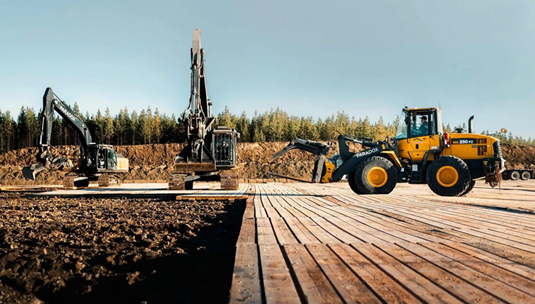
For many projects, access matting is one of the fastest and most effective ways to maintain site access during breakup season.
Access mats help distribute equipment loads across a larger surface area, reducing pressure on weak soils and minimizing damage to the ground below.
Benefits include:
- Improved access across soft soils and muskeg
- Reduced rutting and ground disturbance
- Protection of access roads
- Increased equipment mobility
- Lower reclamation costs
- Improved safety for workers and equipment
Access matting is commonly used for:
- Oil and gas projects
- Pipeline construction
- Utility and transmission projects
- Forestry operations
- Mining exploration
- Temporary work platforms
- Access road construction
Choosing the Right Matting Solution
Different projects require different access solutions.

Fir Access Mats
Fir mats provide a cost-effective temporary access solution for construction projects, equipment access, and short-term ground protection.
Crane Mats
Crane mats create stable working surfaces for lifting operations in soft ground conditions.

Rig Mats
Designed for heavier-duty applications, rig mats are commonly used throughout Alberta’s energy sector for drilling, facility construction, and large equipment movements.
Composite Mats
Composite mats are lightweight, reusable, and well suited for environmentally sensitive areas where minimizing ground disturbance is important.
When Ground Stabilization Makes More Sense
While access matting is ideal for temporary access, some projects require a long-term solution.
Ground stabilization may be the better choice for:
- Permanent access roads
- Laydown yards
- Staging areas
- Heavy haul routes
- Sites with persistent muskeg conditions
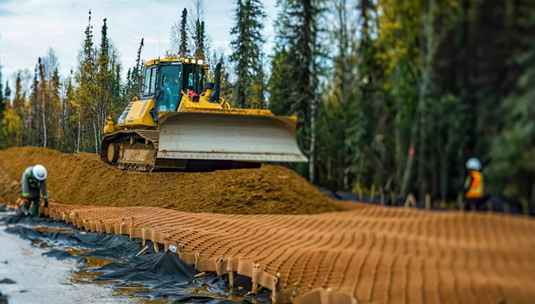
Technologies such as geocell reinforcement can improve soil performance, reduce maintenance requirements, and extend the life of access infrastructure.
Planning Ahead for Spring Breakup
Successful breakup season planning often starts months before thaw conditions arrive.
Consider:
- Monitoring municipal road restrictions
- Identifying soft ground and muskeg areas
- Evaluating temporary access requirements
- Assessing long-term stabilization needs\
- Developing contingency plans for weather-related delays
Taking a proactive approach can reduce downtime, protect infrastructure, and help projects stay on schedule.
Frequently Asked Questions
When does spring breakup occur in Alberta?
Spring breakup generally occurs between March and June, depending on regional weather conditions, frost depth, and snowpack.
What causes road bans during spring breakup?
As roads soften during thaw conditions, municipalities impose weight restrictions to prevent damage to public infrastructure.
What is the best access solution during breakup season?
That depends on project duration and site conditions. Access matting is often ideal for temporary access, while ground stabilization may be more appropriate for long-term infrastructure.
Can access mats be used over muskeg?
Yes. Access mats are frequently used to create temporary access across muskeg and other weak soils by distributing equipment loads and reducing rutting.
When should ground stabilization be considered instead of matting?
Ground stabilization is typically recommended for permanent access roads, long-term developments, and sites that experience recurring soft ground conditions.